What Is a Proforma Invoice? Meaning and Examples
Understand what a proforma invoice communicates, when businesses use one, and how it differs from a final commercial invoice. Includes a worked example.
On this page
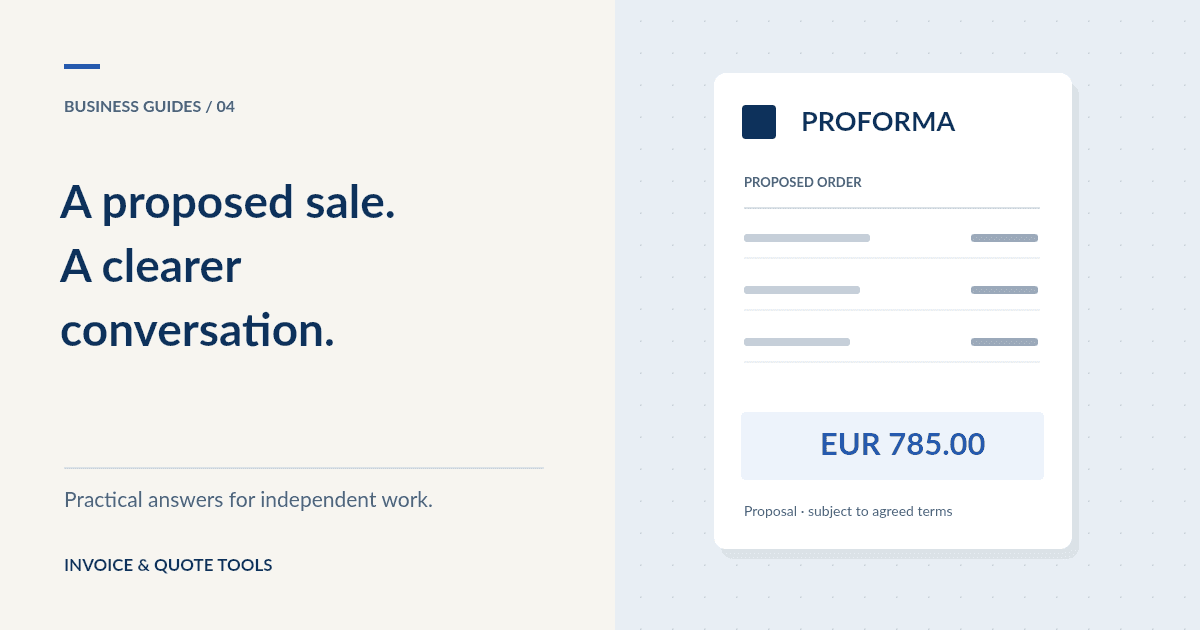
A proforma invoice, also written “pro forma invoice,” sets out a proposed transaction in an invoice-like format. It helps a buyer review the goods or services, price, and terms before the final transaction is documented. It is not, by itself, evidence that payment has been received.
You might encounter one while arranging an advance payment, obtaining internal purchasing approval, or planning an international shipment. Its role is to make the proposed arrangement clear. It should not be confused with the final invoice, a payment receipt, or every document a customs authority may require.
What a proforma invoice is used for
A proforma can give a customer a more detailed view of a proposed order than a short price estimate. It can identify quantities, freight assumptions, currency, payment arrangements, and how long the offer remains valid.
In international trade, the US International Trade Administration describes a pro forma invoice as a quotation presented in invoice form. Its guidance explains that a buyer may need the information when arranging an import license, pre-shipment inspection, a letter of credit, or currency transfer. Those are examples of possible uses, not requirements for every sale.
For a small service business, the practical use can be simpler: the customer wants a document to support budget approval before placing an order. Confirm what their finance team needs. A proforma may help explain the price, but it does not replace an agreed scope or all the documents required by their purchasing process.
Proforma, quotation and commercial invoice compared
| Document | Main purpose | Typical transaction stage | What to avoid assuming |
|---|---|---|---|
| Quotation | Describe an offer, scope and price | Before the customer accepts the proposed work or order | That every quote has the same legal effect or acceptance conditions |
| Proforma invoice | Present proposed transaction details in invoice format | Before final invoicing, often for approval or advance-payment arrangements | That it proves payment or automatically serves as the final tax/customs document |
| Commercial invoice | Document the actual sale for relevant trade and customs processes | As the transaction or shipment is finalized | That a generic service-invoice PDF contains every required trade field |
| Receipt | Acknowledge money received | When a payment is confirmed | That it replaces the invoice or shipment documentation in every situation |
The ITA's commercial invoice guidance explains its role in export/import clearance and advises checking destination-specific requirements. The information required for a shipment can differ substantially from an ordinary domestic service invoice.
What to include on a proforma
Make the status unmistakable: use a visible “Proforma Invoice” heading and a reference that you can distinguish from final invoices. Include the issue date and a clear validity date so the recipient knows how long the quoted arrangement is available.
For a straightforward proposal, gather:
- Seller and buyer names and contact details.
- A specific description of the proposed goods or services.
- Quantities, unit prices, currency, and line totals.
- Any proposed discount, shipping charge, or applicable tax treatment.
- Payment arrangements, including whether an advance is requested.
- Delivery assumptions, expected dates, and what remains subject to confirmation.
- The quote/proforma validity period and acceptance contact.
Cross-border goods may require additional information such as weights, dimensions, agreed delivery terms, or product classifications. Confirm those requirements for the transaction. Do not fill trade fields with guessed values simply to make the document appear complete.
A practical example
Imagine a small supplier discussing an order of 40 desk organizers with an overseas retailer. The seller has agreed an illustrative unit price of EUR 18 and is estimating EUR 65 for shipping. The proposed subtotal is EUR 720, and the proposed total including that shipping estimate is EUR 785 before any taxes or duties that need separate consideration.
The seller issues proforma PF-2026-018, dated 1 November 2026 and valid until 15 November 2026. It identifies the product, quantity, currency, and estimated shipping window. It clearly states which delivery and payment details require the buyer's agreement.
This document helps the retailer review the order. It does not establish that EUR 785 has been paid or that the customs paperwork is complete. If an advance is received, record that payment through the appropriate process. When the final transaction is documented, connect the final invoice to the proforma and reconcile any advance without charging the same amount twice.
What if the quantity changes?
Suppose the buyer requests 50 organizers instead. Recalculate the quoted lines, review shipping assumptions, and issue a clearly identified revision. Tell the buyer which version supersedes the earlier proposal. A proforma with an old quantity and an updated email total creates avoidable ambiguity.
Once the transaction is finalized, follow the rules that apply to correcting final invoices rather than treating them as freely editable quotes. Keep the proposal history separate from the final sales and payment records.
Common mistakes
Treating it as proof of payment
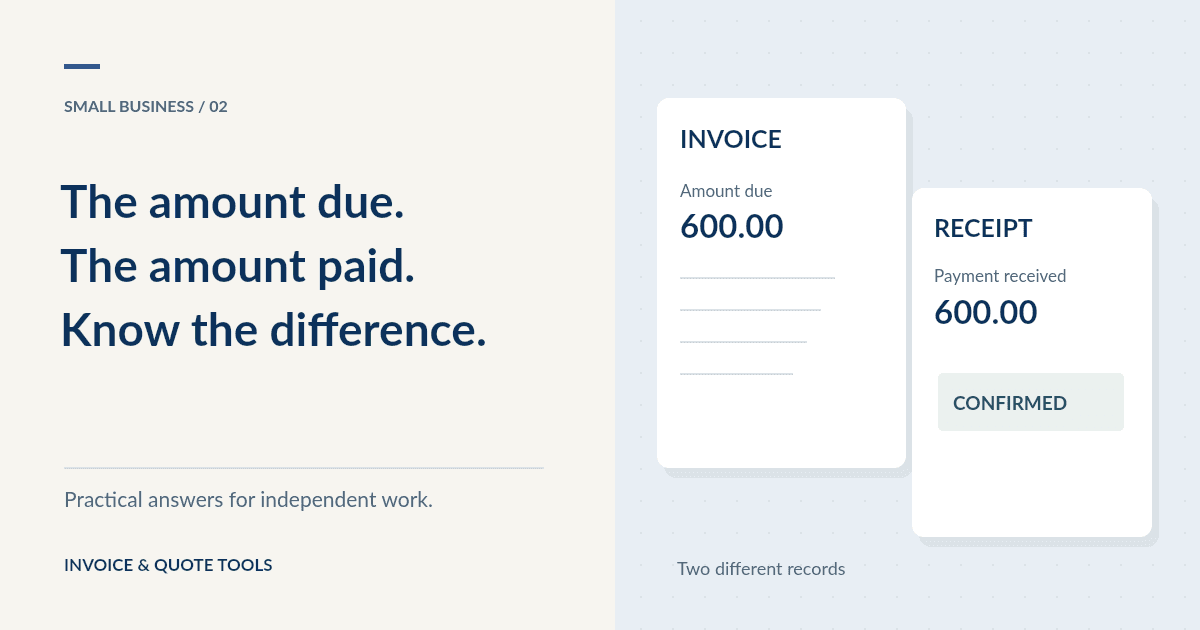
A proposed price and a bank account number do not confirm that money arrived. If you receive an advance, acknowledge the actual payment with the relevant reference and amount. Read invoice versus receipt for examples of partial-payment records.
Leaving the document status unclear
If a proforma looks identical to an invoice requesting the final balance, the customer may route it incorrectly or pay twice when a later invoice arrives. Distinguish the documents through the heading, references, and an explanation of what the recipient should do next.
Assuming it is enough for tax or customs
A proforma is not a universal substitute for a final tax invoice, commercial invoice, or required structured electronic document. Requirements vary by country and transaction. For EU VAT invoicing, consult the European Commission's invoicing guidance and the relevant national authority rather than relying on the document name.
Hiding uncertainty in a final-looking total
If shipping, quantities, or delivery dates are estimates, say so. Specify the validity period and what must be confirmed before the order proceeds. Do not present a cost as fixed when you still intend to renegotiate it.
Using our tools at the right stage
Our current free invoice generator creates ordinary invoice PDFs with business details, line items, terms, and customizable labels. It is not a dedicated export-document or proforma-compliance system. Renaming a document title does not establish that the resulting PDF meets the requirements of an international shipment.
When you are ready to invoice a straightforward service transaction, the invoice creation guide walks through the existing tool. For proposals and trade documents, first confirm the information and format required by the buyer and relevant authorities.
Frequently asked questions
Is a proforma invoice legally binding?
The name alone does not answer that question. The wording, acceptance, contract, conduct of the parties, and applicable law matter. Do not assume that calling a document “proforma” removes obligations or creates an enforceable agreement. Get appropriate advice if the legal effect is important to the transaction.
Can a customer pay against a proforma?
Businesses sometimes use one to arrange an advance payment. Explain what the payment is for, confirm how it will be recorded, and connect it to the eventual final invoice. Payment does not automatically turn every proforma into a compliant final tax document.
Is it the same as an estimate?
Both can describe proposed work or goods and a price. A proforma generally uses invoice-style detail, while an estimate may communicate a less final price expectation. State whether a price is fixed, estimated, or subject to conditions instead of expecting the label to explain it.
Should it have a due date?
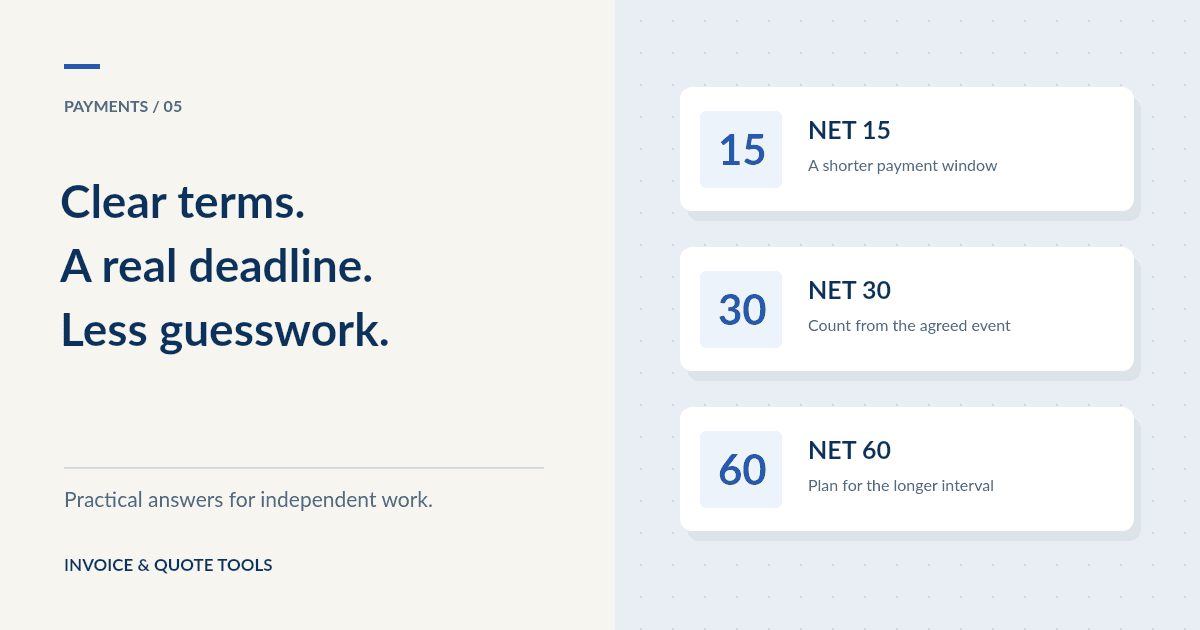
Use dates that fit its purpose. An offer may need a validity deadline; an agreed advance may need a payment deadline. Label those separately so “valid until” is not mistaken for “pay by.” Our payment terms guide explains how to make payment deadlines explicit.
Put the guide into practice.
Create an invoice with your details, choose a professional template, and download your PDF. Free, with no signup.
Create Your Free InvoicePractical guides to using invoices and business documents. Examples are illustrative. Tax, invoicing and payment rules depend on your location and circumstances; check the linked official guidance for your situation.